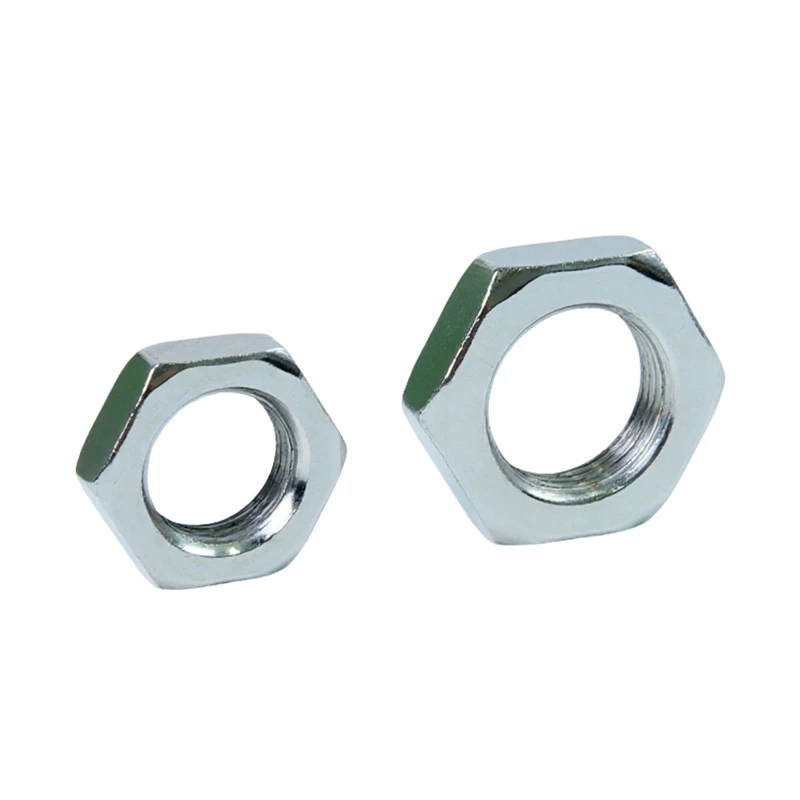
Nuts and internally threaded components enjoy relatively stable market demand in modern industrial markets and are an important part of the mechanical fastener industry. Nuts are widely used in automobile manufacturing, machinery and equipment, construction engineering, rail transportation, aerospace, and electronics, and their market performance is closely related to manufacturing development, infrastructure construction, and industrial production scale. In recent years, with the continuous advancement of global industrialization, the development of the automotive industry, new energy equipment, construction machinery, and high-end equipment manufacturing has further driven the market demand for nuts and internally threaded components.
The nut and internally threaded component industry is characterized by a wide variety of products, a large number of manufacturers, and intense market competition. The production technology for ordinary standard nuts is relatively mature, and the market supply is relatively abundant. Competition among enterprises mainly focuses on product price, production efficiency, delivery cycle, and product quality. Therefore, profit margins are easily affected by raw material prices and changes in market supply and demand. In contrast, high-strength nuts, precision threaded components, and corrosion-resistant nuts used in special environments have higher requirements for material properties, machining accuracy, heat treatment processes, and quality inspection, resulting in relatively higher added value. With the development of industries such as new energy vehicles, aerospace, intelligent equipment, and new energy infrastructure, the market demand for highly reliable, lightweight, and customized threaded fasteners is constantly increasing. In the future, the nut and internal thread component industry will gradually shift from traditional mass standardized production to high-precision, high-performance and specialized manufacturing. Enterprises need to enhance their market competitiveness by improving processing technology, increasing the level of automated production and strengthening product quality control.