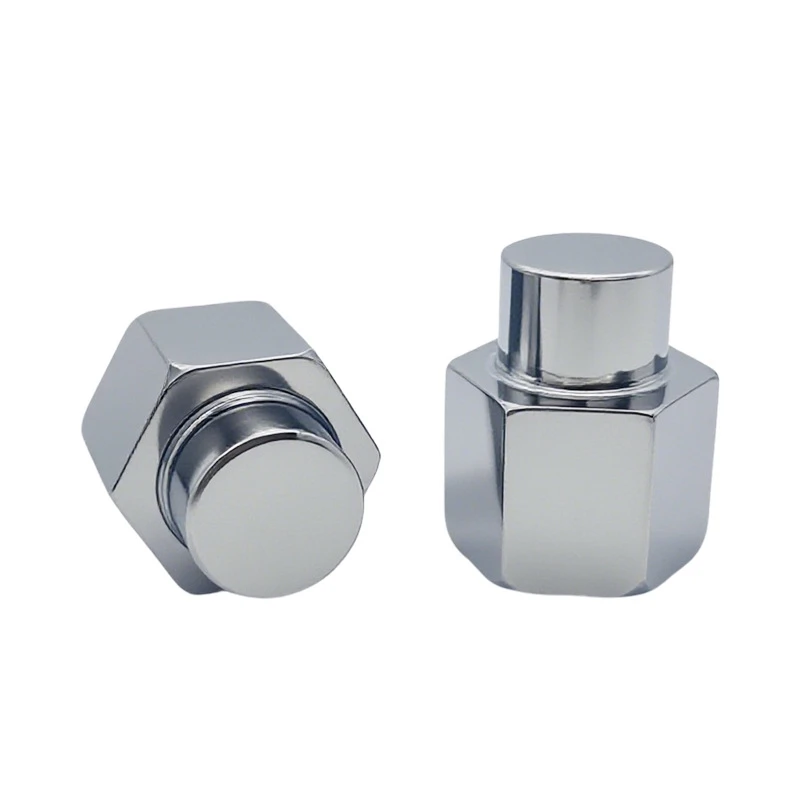
The maintenance cycle for nuts and internally threaded components depends primarily on the equipment's working environment, usage frequency, load, and the importance of the connection. There is no fixed maintenance schedule applicable to all products. For ordinary nuts and internally threaded connectors in general mechanical equipment, inspections can usually be integrated into routine equipment maintenance. It is recommended to perform a visual inspection every 1-3 months, focusing on whether the nuts are loose, corroded, cracked, deformed, or have damaged threads. For connections subjected to prolonged vibration, impact, or high-load conditions, the inspection cycle should be shortened appropriately, with weekly or monthly focused inspections. If necessary, check the pre-tightening condition of the connection to prevent nut loosening or stripping of the internal threads. In humid, dusty, or corrosive environments, it is also necessary to regularly inspect the surface and threads of the nuts for corrosion, and clean away contaminants and apply appropriate protective measures as needed. For critical connections in equipment that operate continuously for extended periods, nuts and internally threaded components should be included in the regular equipment maintenance schedule to prevent performance degradation due to prolonged use.
Cleaning, lubrication, tightening, and replacement of nuts and internally threaded components should be performed based on their actual wear and tear. For ordinary threaded connections, after the equipment is stopped and safety is ensured, check the thread surface for wear, burrs, rust, and deformation. Tighten to the torque specified by the equipment to avoid damage to the threads due to overtightening. For frequently disassembled connections, focus on checking the internal threads for stripping, wear, or insufficient effective engagement length. If severe thread damage is found, replace the nut promptly or use a thread repair solution that meets design requirements. For nuts with nylon locking structures or other anti-loosening functions, monitor their locking performance for degradation and replace them if necessary. Generally, there is no uniform mandatory replacement cycle for nuts and internal threaded components; the actual wear level, inspection results, and maintenance requirements of the equipment manufacturer are usually used as the basis for judgment. By establishing a maintenance system that combines regular inspection, timely cleaning, proper lubrication, and replacement for abnormalities, the service life of threaded connections can be effectively extended, improving the safety and reliability of mechanical equipment operation.